Common Phosphatase Substrates and Reaction Contexts
A practical B2B guide to the substrate classes phosphatase enzymes act on, including proteins, nucleotides, sugar phosphates, lab substrates, and matrix-specific formulation considerations.
Common Phosphatase Substrates and Reaction Contexts
Phosphatase enzymes catalyze the removal of phosphate groups from phosphorylated molecules. That simple description covers a wide technical range: proteins, nucleotides, sugar phosphates, phosphorylated metabolites, synthetic indicator substrates, and matrix-bound phosphate esters can all be relevant depending on the enzyme class and production context.
For B2B buyers, the key question is not only “what does a phosphatase act on?” It is “which substrate class, in which matrix, under which operating constraints, with what tolerance for side activity?” This page summarizes the common substrate categories and the reaction contexts that matter in formulation, diagnostics, food processing, biomanufacturing, and laboratory workflows.
What phosphatases do at the substrate level
A phosphatase hydrolyzes a phosphate ester or related phosphorylated bond, releasing inorganic phosphate and a dephosphorylated product. The target may be a small molecule, a macromolecule, or a designed analytical substrate.
In practical terms, substrate fit depends on several variables:
Substrate access: soluble, particle-associated, protein-bound, membrane-associated, or embedded in a complex matrix.
Reaction environment: pH, temperature, ionic composition, water activity, solvent exposure, chelators, salts, metals, and inhibitors.
Specificity requirement: broad dephosphorylation versus a narrow target class.
Downstream tolerance: whether released phosphate, dephosphorylated products, or residual enzyme must be controlled.
Common phosphatase substrate classes
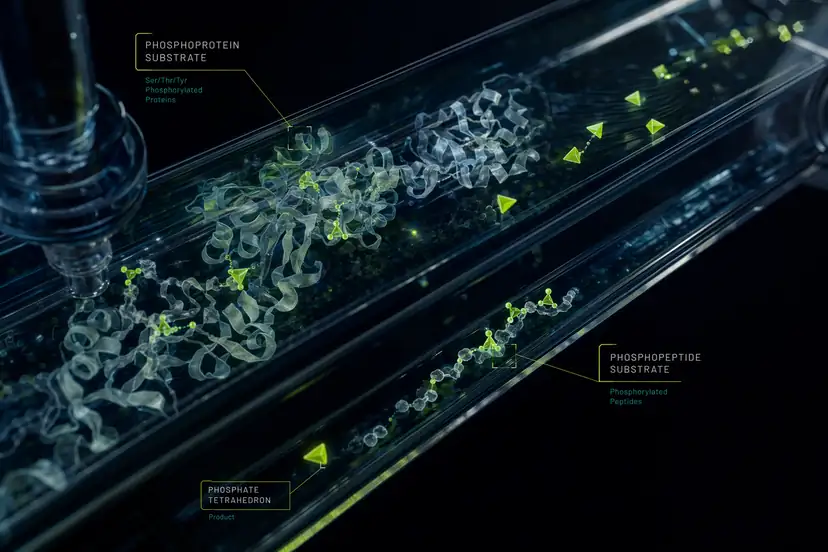
1. Phosphoproteins and phosphopeptides
Protein phosphatases act on phosphorylated amino acid residues, most commonly phosphoserine, phosphothreonine, or phosphotyrosine. These substrates are important in cell biology, diagnostics development, signal pathway research, and certain bioprocess monitoring applications.
Typical reaction contexts include:
Dephosphorylation of recombinant proteins or peptide intermediates.
Preparation of control materials for analytical workflows.
Removal or modulation of phosphate groups that affect charge, binding, migration, or detection response.
Research-grade pathway studies where phosphorylation state is the variable of interest.
For procurement, the main question is specificity. A broad phosphatase may reduce multiple phosphorylated residues, while a more selective enzyme may be needed when preserving neighboring phosphorylation sites matters.
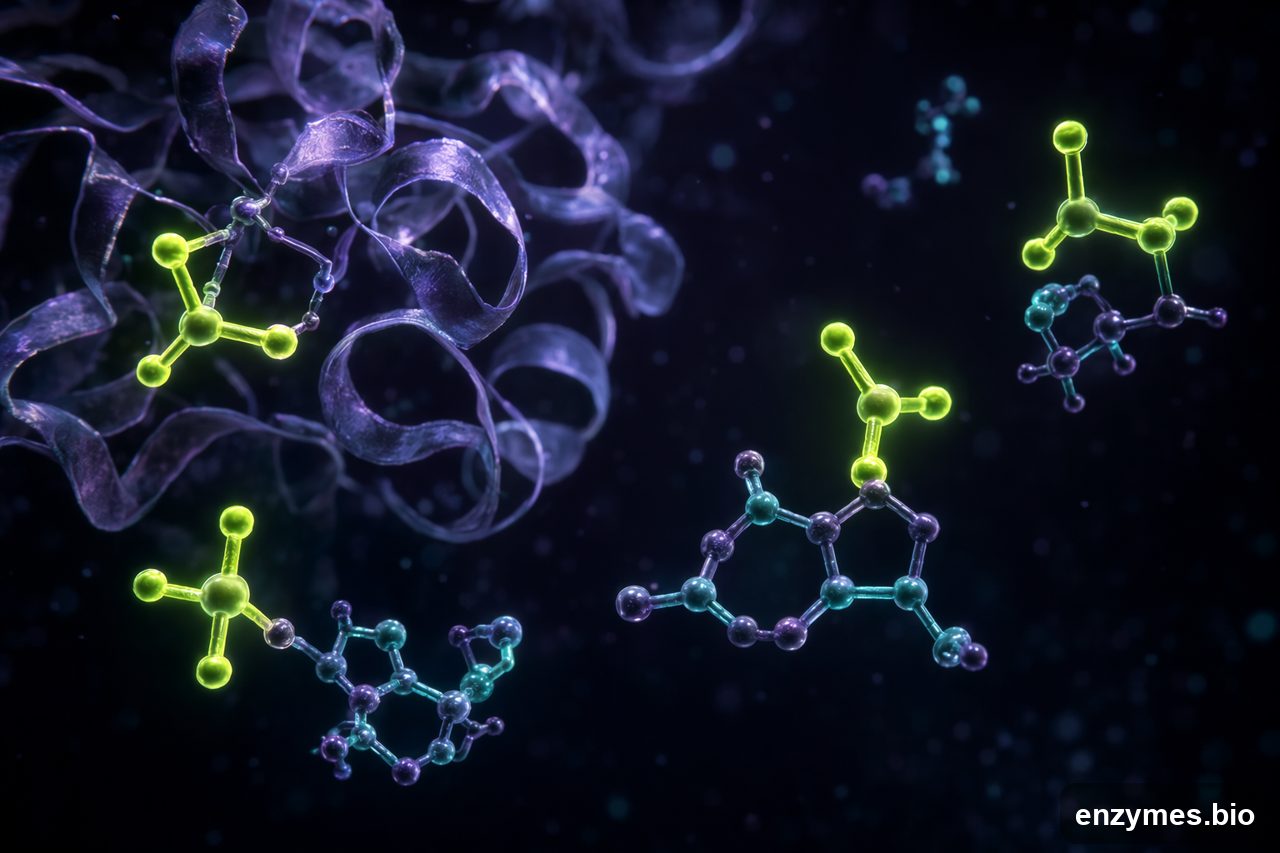
2. Nucleotides and nucleotide phosphates
Certain phosphatases act on nucleotide mono-, di-, or triphosphates and related phosphorylated cofactors. The target can be free nucleotide, a terminal phosphate, or a phosphorylated intermediate in a larger biochemical system.
Relevant settings include:
Molecular biology workflows where phosphate state influences ligation, labeling, or background signal.
Diagnostics systems where nucleotide conversion must be controlled to reduce interference or enable signal generation.
Process teams should define whether the objective is partial phosphate trimming, complete dephosphorylation of a terminal phosphate, or conversion of a specific nucleotide pool.
3. Sugar phosphates and carbohydrate-linked phosphate esters
Sugar phosphates appear in metabolic intermediates, fermentation streams, analytical standards, food matrices, and industrial biotechnology processes. Some phosphatases can dephosphorylate monosaccharide phosphates or phosphorylated carbohydrate derivatives, depending on substrate geometry and enzyme class.
Common considerations include:
The position of the phosphate group on the sugar.
Interference from salts, organic acids, proteins, or fermentation byproducts.
Whether the desired output is a dephosphorylated sugar, phosphate release, or matrix conditioning.
Compatibility with viscosity, solids, and upstream residues.
This substrate category is highly context-dependent. Early compatibility screening should use the actual process matrix when possible rather than a simplified buffer-only model.
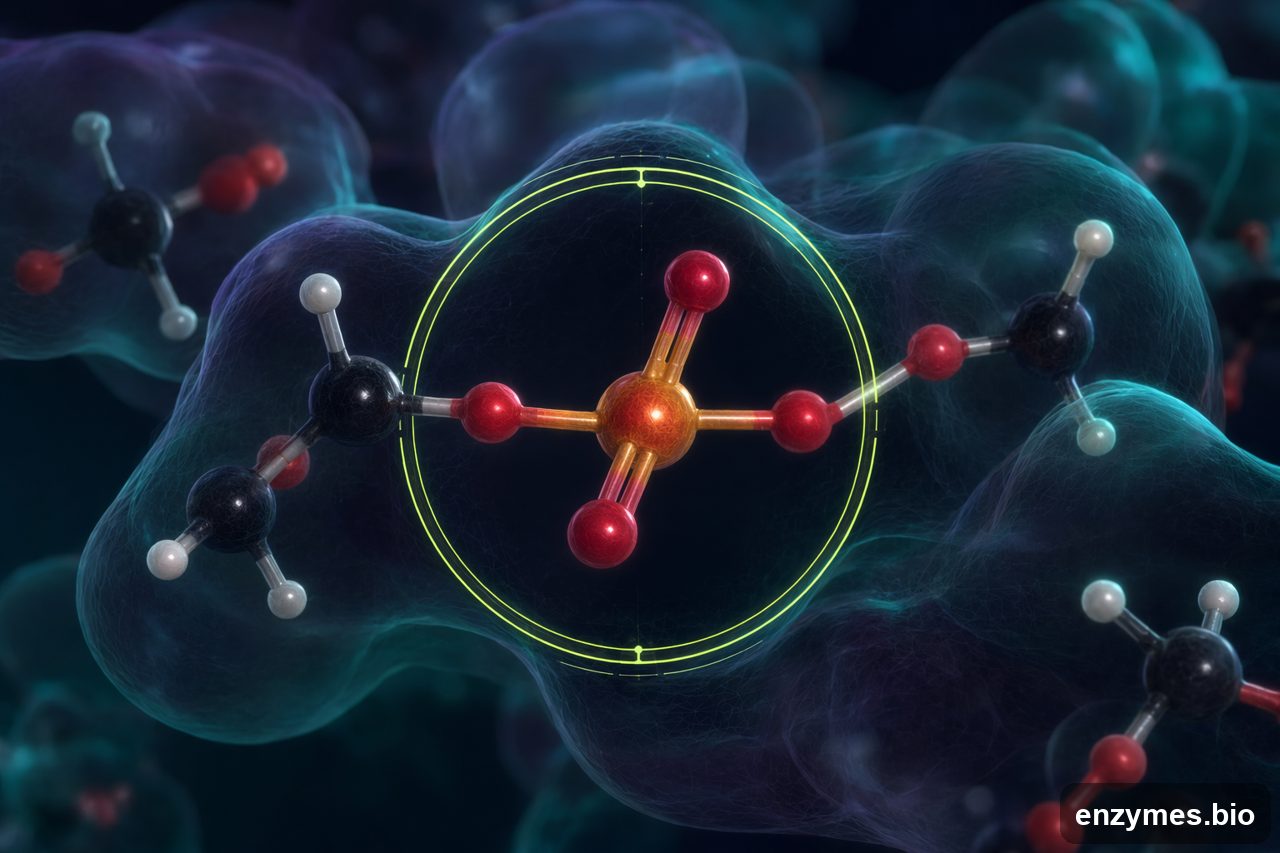
4. Phosphorylated small molecules and metabolites
Many industrial and laboratory systems contain phosphorylated intermediates that are not proteins or nucleotides. These can include metabolic phosphates, phosphorylated alcohols, organic phosphate esters, and intermediate chemicals used in synthesis or analytical preparation.
Use cases may include:
Dephosphorylation before purification or downstream conversion.
Controlled release of phosphate from a defined intermediate.
Matrix cleanup where phosphate-containing compounds interfere with readout or product quality.
R&D route evaluation for biocatalytic or hybrid chemical-enzymatic processes.
For these substrates, feasibility is often driven by molecular access and stereochemical fit. A substrate name alone is rarely enough; teams should provide structure, solvent exposure, pH window, and impurity profile during technical review.
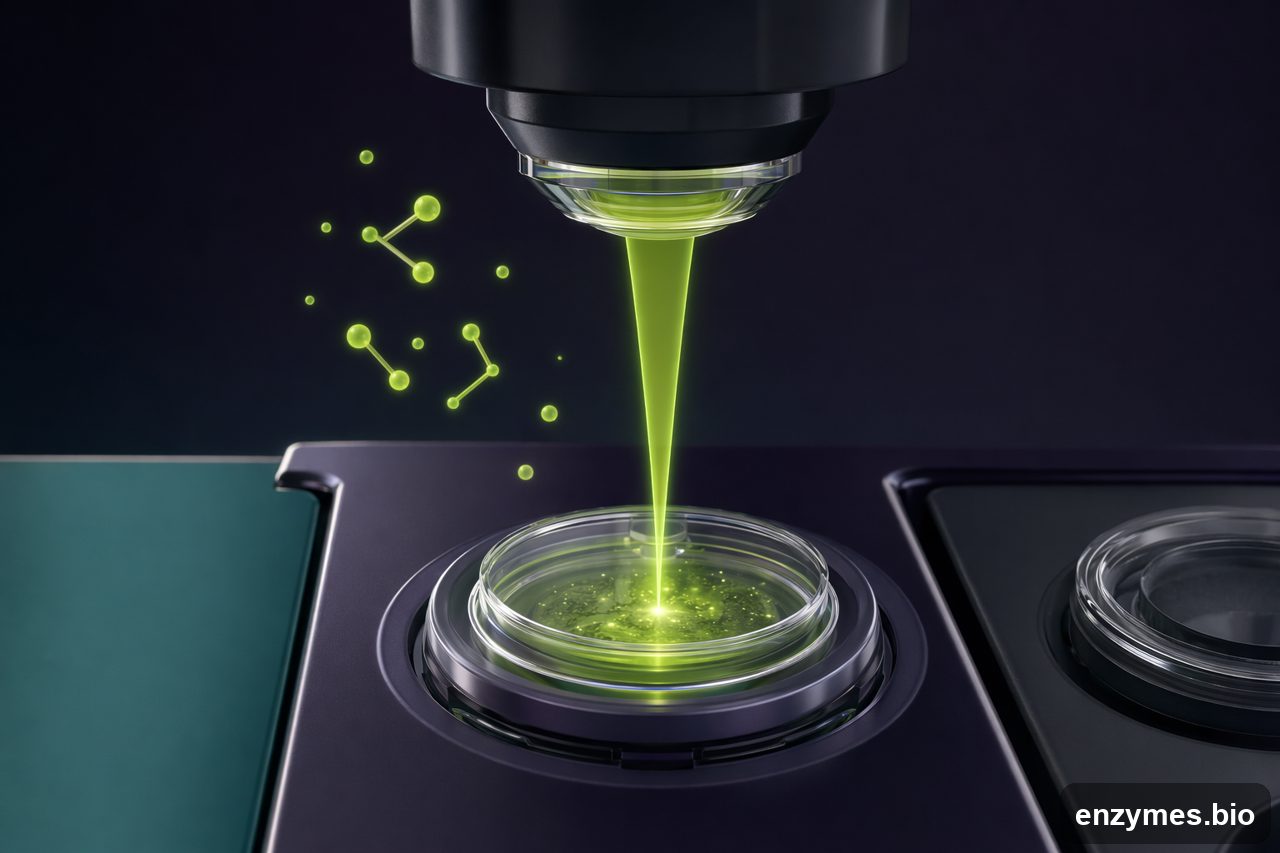
5. Synthetic chromogenic, fluorogenic, and chemiluminescent substrates
Diagnostic and analytical teams frequently use designed phosphate-containing substrates to generate measurable signal after enzymatic dephosphorylation. These substrates are selected for optical or luminescent response, not because they represent a production feedstock.
Reaction contexts include:
Enzyme-labeled immunoassay development.
Reporter systems for detection platforms.
Comparative screening of enzyme lots or formulations.
Quality control materials where signal stability and background control matter.
The important commercial variables are substrate compatibility, background suppression, signal timing, reagent stability, and tolerance to preservatives or formulation excipients.
6. Matrix-bound phosphate esters
In food, feed, fermentation, and environmental matrices, phosphate groups may be present in complex, partly insoluble, or matrix-bound forms. While phytase is the dedicated enzyme class for phytic acid, broader phosphatase discussions often include matrix-bound phosphate esters when teams are evaluating phosphate release or matrix conditioning.
Key constraints include:
Solids loading and mass transfer.
Competing enzymes in the matrix.
Natural inhibitors and metal-binding components.
Heat exposure before or after the reaction step.
Whether the released phosphate is beneficial, neutral, or a downstream burden.
Common reaction contexts by application area
Diagnostics and bioanalytical systems
Phosphatases are used as enzyme labels, signal-generation components, background control tools, and phosphorylation-state modifiers. In this setting, substrate selection is tied to readout format and reagent architecture.
Buyer-relevant questions include:
Is the substrate chromogenic, fluorescent, luminescent, or electrochemical?
Does the matrix contain phosphate, chelators, detergents, serum components, or preservatives?
Is the required response rapid, delayed, endpoint-based, or kinetic in character?
Does the formulation need dry stability, liquid stability, or freeze-thaw tolerance?
Molecular biology and nucleic acid workflows
Phosphatases can remove phosphate groups from nucleic acid ends or nucleotide contaminants, depending on enzyme type and workflow design. In these systems, the substrate may be a DNA/RNA end, free nucleotide, or residual phosphorylated reagent.
Important selection factors:
Desired action on 5′ phosphate groups versus free nucleotides.
Heat handling requirements and inactivation strategy.
Compatibility with ligases, polymerases, buffers, salts, and downstream purification.
Need for minimal carryover into the next reaction step.
Food, beverage, and fermentation matrices
In complex biological matrices, phosphatase performance is shaped by pH, minerals, proteins, polyphenols, salts, and thermal history. The substrate may be soluble or embedded in a bulk matrix.
Application teams typically evaluate:
Whether the target substrate is accessible without harsh pretreatment.
Impact on flavor, clarity, precipitation, or mineral balance.
Thermal exposure before and after dosing.
Whether released phosphate affects labeling, nutrition profile, or downstream processing.
Biomanufacturing and industrial biotechnology
In bioprocess environments, phosphatases may support intermediate conversion, impurity control, analytical preparation, or process characterization. Here, substrate identity must be considered alongside process fit.
Relevant evaluation points:
Batch versus continuous exposure.
Enzyme removal, retention, or immobilization strategy.
Tolerance to process salts, pH shifts, solvents, and antifoams.
Product contact requirements and documentation expectations.
Interaction with downstream filtration, chromatography, or precipitation.
Substrate specificity: broad does not mean uncontrolled
Some phosphatases are described as nonspecific because they act on a broad range of phosphate esters. That does not mean their behavior is random. Specificity is shaped by substrate accessibility, charge distribution, local structure, pH, cofactors, and inhibitors.
When discussing a new substrate, define:
The exact phosphorylated compound or compound family.
Whether the phosphate group is terminal, internal, protein-bound, or sterically shielded.
The matrix composition and impurity profile.
Desired conversion endpoint.
Any materials that must remain phosphorylated.
Downstream sensitivity to phosphate release.
This information is more useful than asking for a generic “phosphatase for phosphate removal.”
Reaction conditions that influence substrate performance
Phosphatase-substrate behavior is especially sensitive to environment. During technical evaluation, teams should pay attention to:
pH window: acid, neutral, and alkaline phosphatases differ in their preferred operating range.
Temperature exposure: the operating temperature may differ from the enzyme’s storage or short-term tolerance.
Metal ions and chelators: some phosphatases require metal-associated structure or are inhibited by chelating agents.
Free phosphate: accumulated phosphate can reduce reaction efficiency in some systems.
Detergents and solvents: useful for solubilizing substrates, but potentially disruptive to enzyme structure.
Matrix solids: particulates can limit access or adsorb enzyme.
Preservatives: common formulation additives may affect stability or reaction profile.
How to specify a phosphatase substrate for sourcing
To accelerate review and avoid unsuitable recommendations, include the following in your inquiry:
Substrate identity: chemical name, structure, or representative class.
Application: diagnostics, molecular biology, food, fermentation, biomanufacturing, R&D, or other.
Success criteria: dephosphorylation target, signal profile, cleanup objective, or downstream compatibility requirement.
Practical substrate examples
Substrate category
Example context
Selection priority
Phosphoproteins
Control material preparation, protein characterization
Residue specificity and preservation of non-target sites
Phosphopeptides
Analytical standards, pathway studies
Defined conversion and low background
Nucleotide phosphates
Molecular workflows, biochemical intermediates
Compatibility with downstream enzymes
Nucleic acid ends
Ligation control, cloning preparation
Targeted phosphate removal and inactivation strategy
Sugar phosphates
Fermentation and metabolic intermediate work
Matrix tolerance and phosphate-position fit
Synthetic signal substrates
Immunoassay and reporter formats
Signal stability and formulation compatibility
Organic phosphate esters
Process cleanup or route development
Chemical fit and impurity tolerance
Matrix-bound phosphate esters
Food, feed, fermentation, environmental matrices
Access, solids handling, and released-phosphate impact
Request pricing or technical fit review
If you are evaluating phosphatase enzymes for a defined substrate class, send the application context and operating window. Phosveil can review fit, documentation needs, and supply options for research, pilot, or industrial use.
Frequently asked questions
What are the most common phosphatase substrates?
Common substrates include phosphoproteins, phosphopeptides, nucleotides, nucleic acid ends, sugar phosphates, phosphorylated metabolites, organic phosphate esters, and synthetic diagnostic substrates.
Do all phosphatases act on the same substrates?
No. Phosphatases differ by class, source, structure, pH preference, cofactor dependence, and substrate access. A broad phosphatase may work across several phosphate esters, while a specialized phosphatase may be suited to a narrower target.
Can a phosphatase remove phosphate from proteins and small molecules?
Some broad phosphatases can act on both macromolecular and small-molecule phosphate esters, but performance depends on the specific enzyme and reaction matrix. If site selectivity matters, the enzyme should be evaluated against the exact substrate system.
Are synthetic diagnostic substrates the same as industrial process substrates?
Not usually. Synthetic signal substrates are designed for measurable output in analytical systems. They are useful for comparison and development, but they may not predict performance in a food, fermentation, or process chemistry matrix.
What information is needed to recommend a phosphatase?
The most useful information is substrate identity, matrix composition, operating pH, temperature range, contact time, prohibited additives, and the desired endpoint. For complex matrices, a representative sample or detailed composition is often more informative than a generic substrate name.