Phosphatase Enzymes for Diagnostic Reagent Manufacturing | Phosveil
Technical overview of phosphatase enzymes used in diagnostic reagent production, including assay roles, formulation considerations, quality controls, and sourcing criteria.
Phosphatase Enzymes in Diagnostic Reagent Manufacturing
Diagnostic reagents are only as reliable as the biochemical controls behind them. Phosphatase enzymes are used where phosphate removal, signal generation, or substrate conditioning must occur with predictable kinetics and controlled background.
For manufacturing teams, the question is rarely whether a phosphatase can react. The critical question is whether it can react consistently inside a defined reagent system: through conjugation, stabilization, filling, shipping, storage, and use.
Where phosphatases fit in diagnostic workflows
Phosphatase enzymes support several diagnostic reagent formats, including immunoassays, molecular biology workflows, substrate conversion systems, and sample-preparation kits.
Common manufacturing use cases include:
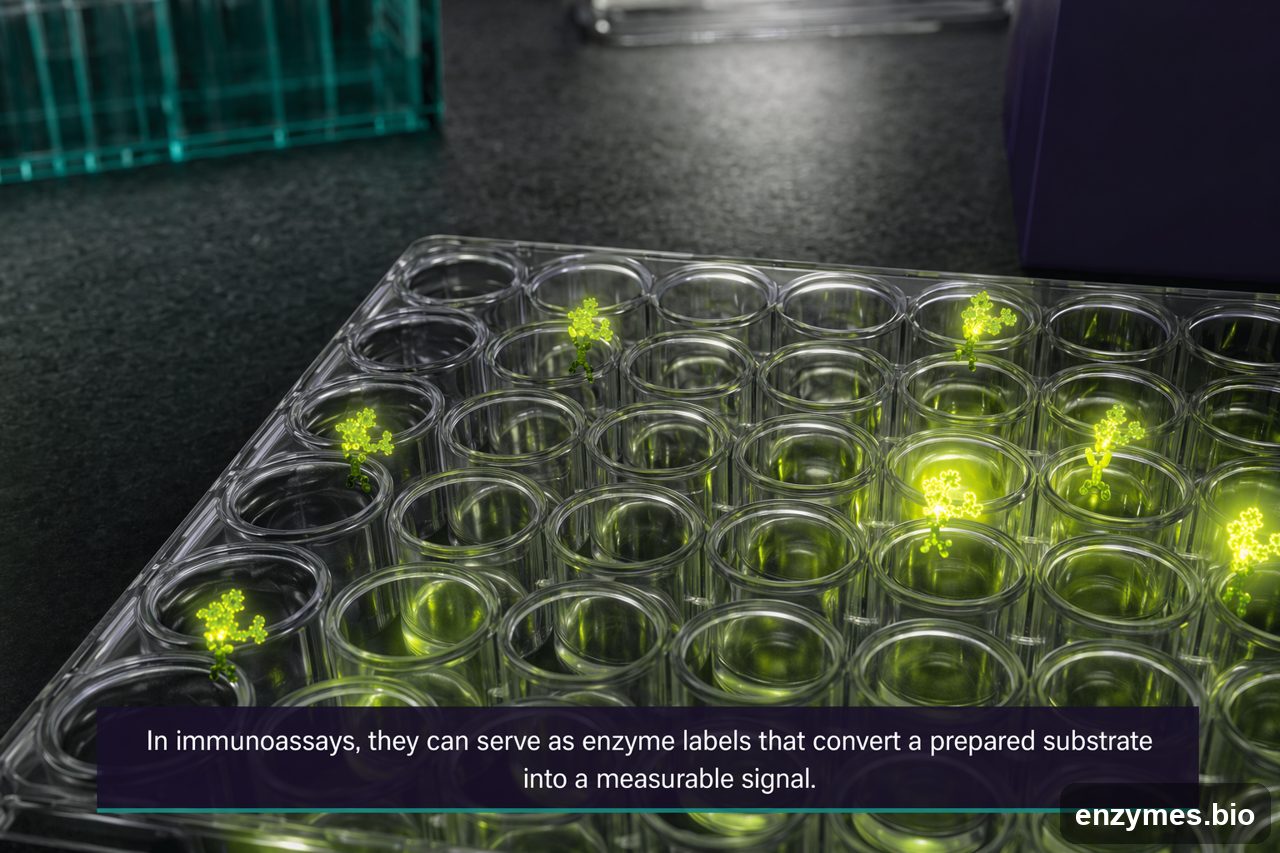
Enzyme labels for immunoassays, where phosphatase-linked antibodies, antigens, or binding proteins generate a detectable signal after substrate addition.
Dephosphorylation steps in molecular biology, where phosphate groups are removed from nucleic acids, proteins, or small-molecule substrates before downstream processing.
Signal amplification systems, where phosphate-containing substrates are converted into colorimetric, chemiluminescent, fluorescent, or electrochemical readouts.
Reagent conditioning, where phosphate state affects binding, background, stability, or downstream compatibility.
Control materials and calibrator systems, where a defined phosphatase response helps verify reagent integrity across production lots.
Why diagnostic teams specify phosphatase carefully
A phosphatase used in a diagnostic reagent is not a generic process aid. It becomes part of the analytical architecture of the kit. Poor fit can appear as high background, weak signal, unstable conjugates, lot drift, or unexpected interference from the sample matrix.
Key selection criteria typically include:
Substrate preference and selectivity
Operating pH window within the finished reagent
Compatibility with salts, surfactants, blockers, preservatives, and stabilizers
Low nonspecific background under kit-use conditions
Resistance to aggregation or loss during storage
Suitability for liquid, frozen, or lyophilized formats
Low burden of interfering enzymes such as nucleases, proteases, or unintended phosphatase classes
Lot-to-lot consistency supported by controlled documentation
Alkaline phosphatase and other diagnostic phosphatases
Alkaline phosphatase is widely used in diagnostic manufacturing because it can deliver strong signal generation in many immunoassay formats. It is commonly evaluated for conjugation behavior, substrate compatibility, low background, and stability under storage stress.
Other phosphatase types may be selected when the reagent design requires a different pH profile, substrate preference, or process role. In manufacturing terms, the best choice is defined by the final reagent environment, not by enzyme category alone.
Selection should follow the reagent, not the catalog name
A practical sourcing discussion should start with the diagnostic format:
What substrate or phosphorylated target must be converted?
What sample matrix will the reagent encounter?
Will the enzyme be free in solution, immobilized, conjugated, dried, or co-formulated?
What blockers, detergents, salts, polymers, or preservatives are present?
What shelf-life target and shipping profile must the reagent support?
What quality documentation is required by the production and regulatory teams?
This information narrows the specification faster than a broad request for phosphatase alone.
Manufacturing considerations for phosphatase-based reagents
Conjugation compatibility
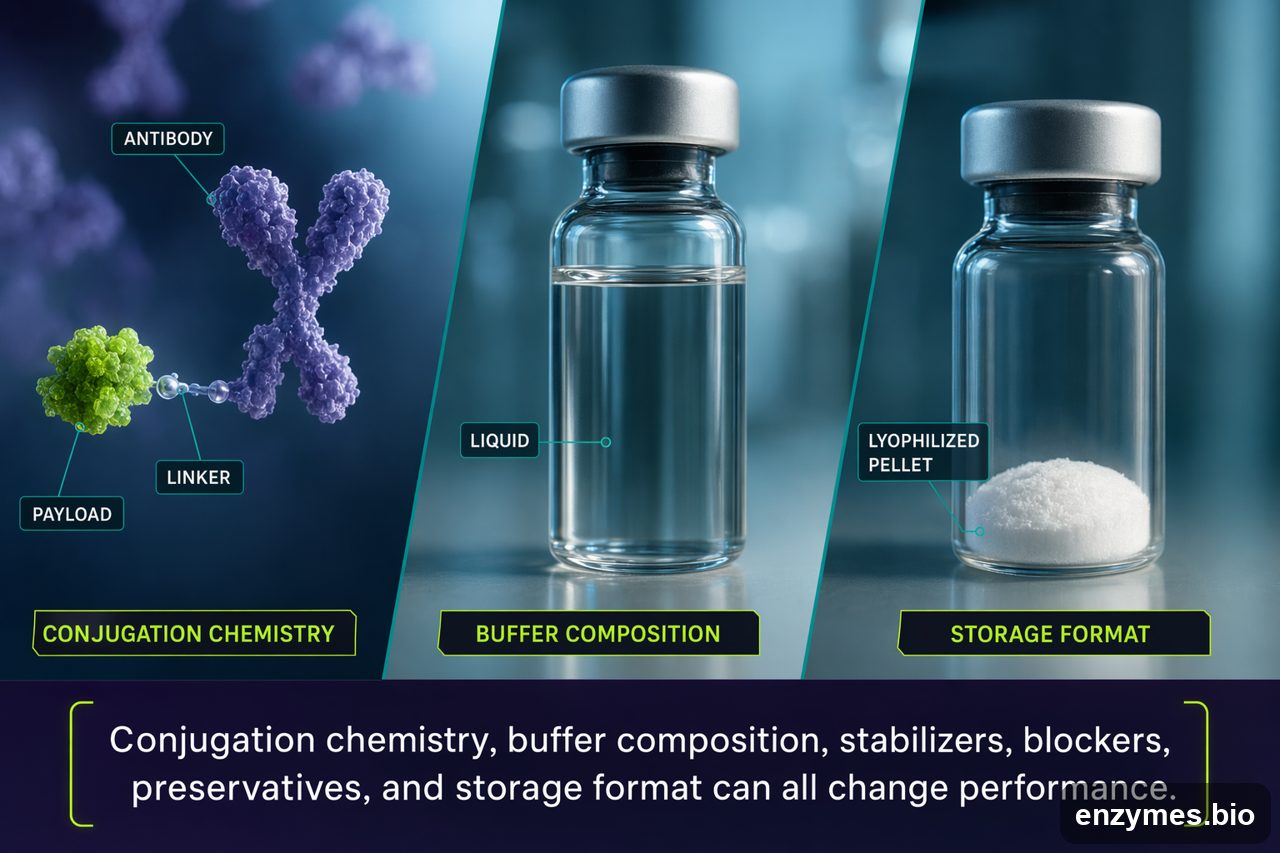
When a phosphatase is used as a label, conjugation chemistry can alter binding, solubility, and signal behavior. Manufacturing teams should evaluate whether the enzyme tolerates the selected linker chemistry and whether the finished conjugate remains stable in the intended buffer.
Important considerations include:
Retention of functional response after conjugation
Minimal aggregation during coupling and cleanup
Controlled background in the absence of target binding
Compatibility with antibody, antigen, streptavidin, polymer, or particle systems
Reproducible performance after scale-up
Buffer and excipient fit
Phosphatase performance is influenced by the full reagent environment. Buffer selection, divalent ions, chelators, surfactants, blockers, sugars, proteins, antimicrobial preservatives, and polymers can all affect output.
A strong supplier conversation should include the intended formulation envelope. Even small changes in excipients can shift background, stability, or substrate turnover.
Stability through the finished format
Diagnostic reagent manufacturing often requires enzyme performance after filling, freeze-thaw exposure, lyophilization, accelerated aging, or transport. The enzyme should be evaluated in the final or near-final formulation, not only in a simple screening buffer.
For liquid reagents, teams typically assess signal retention, background, aggregation, and preservative compatibility. For dried formats, they assess reconstitution behavior, cake or pellet integrity, moisture sensitivity, and post-rehydration response.
Purity and interfering activities
A phosphatase used in diagnostics should be evaluated for more than its intended reaction. Trace contaminants can affect assay sensitivity, nucleic-acid integrity, protein stability, or background signal.
Depending on the application, teams may request information related to:
Host-cell protein profile
Residual nucleic acids
Protease burden
Nuclease burden
Unintended phosphatase behavior
Bioburden expectations for the intended use
Endotoxin profile when relevant to the diagnostic platform
Quality documentation buyers should request
For production use, documentation matters as much as the vial. Diagnostic buyers often need a clear technical and quality package before qualification.
Useful documents may include:
Product specification sheet
Certificate of analysis for each lot
Safety data sheet
Origin and manufacturing summary where appropriate
Allergen, animal-origin, or recombinant-origin statements when required
Storage and handling guidance
Change-notification expectations
Recommended retest or shelf-life framework
The documentation set should match the risk profile of the diagnostic reagent and the purchasing team’s quality system.
Scale-up questions before purchase approval
Before moving from evaluation to production, ask practical manufacturing questions:
Can the same grade be supplied consistently across forecasted demand?
Are pilot, validation, and production quantities available without changing the material profile?
What is the expected lead time for repeat lots?
Can lot reservation or campaign planning be supported?
Are packaging sizes aligned with batch manufacturing needs?
Is technical support available during formulation or transfer?
Early answers reduce reformulation risk later.
How Phosveil supports diagnostic reagent teams
Phosveil supplies phosphatase enzymes for B2B diagnostic and biotech manufacturing teams that need technical clarity before qualification. We support reagent-development discussions around enzyme role, formulation environment, quality expectations, and scale planning.
Tell us the diagnostic format, intended substrate class, formulation constraints, storage target, and documentation needs. We will help align the phosphatase specification with the manufacturing route.
Request a quote or get pricing
Use the form below to request pricing, availability, documentation, or a technical sourcing discussion for phosphatase enzymes.