learn
How Phosphatase-Catalyzed Dephosphorylation Works
A technical guide to phosphatase enzyme action, substrate fit, workflow considerations, and process factors for enzymatic phosphate removal.
Request pricing A technical guide to phosphatase enzyme action, substrate fit, workflow considerations, and process factors for enzymatic phosphate removal.
Request pricingPhosphatase Enzymes remove phosphate groups from compatible molecules. That single chemical change can shift charge, solubility, binding behavior, signal output, nutritional profile, or downstream processability.
For B2B teams, the useful question is rarely “Can a phosphatase remove phosphate?” It is more specific: Can the right phosphatase remove the right phosphate group, in the right matrix, without disrupting the rest of the workflow?

This page explains the mechanism in practical terms for formulation scientists, process engineers, diagnostics teams, food technologists, and industrial biotech buyers evaluating enzymatic dephosphorylation.
Dephosphorylation is the removal of a phosphate group from a molecule. In phosphatase-catalyzed systems, the enzyme accelerates cleavage of a phosphate-linked bond under controlled processing conditions.
Typical targets may include:
The phosphate group is not simply “erased.” It is converted into a released phosphate species or phosphate-bearing product while the original substrate becomes its dephosphorylated form.
A phosphatase works by bringing three elements into controlled proximity:
In simplified workflow terms, the sequence is:
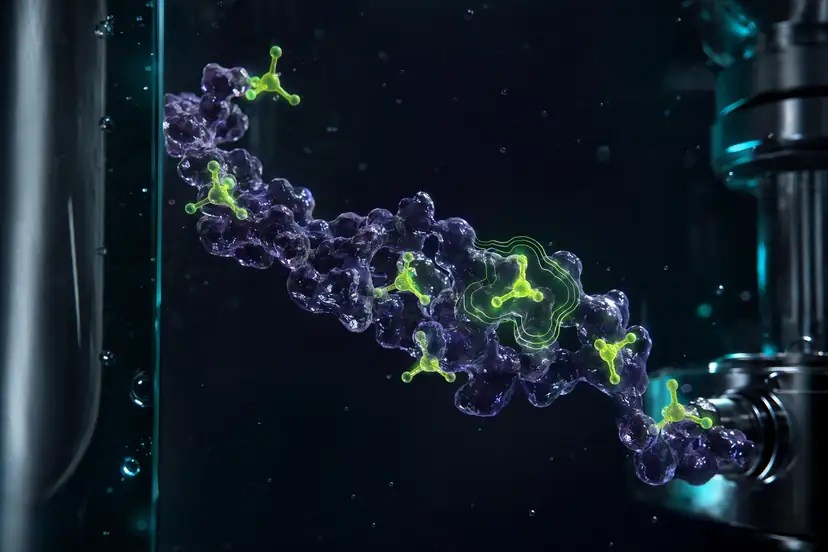
The enzyme binds a molecule carrying an accessible phosphate group. Fit depends on more than the presence of phosphorus. The surrounding structure, steric access, charge environment, and matrix composition all influence whether the enzyme can engage the target efficiently.
The active site orients the phosphate group and stabilizes charged transition states that would otherwise be energetically unfavorable. Many phosphatases also depend on specific cofactors or metal-ion environments for optimal structural and catalytic performance.
The enzyme weakens the bond connecting the phosphate group to the substrate. Depending on enzyme class, this may involve direct hydrolysis by activated water or formation of a transient enzyme-phosphate intermediate.
The phosphate group is separated from the substrate. The dephosphorylated molecule leaves the active site, and the enzyme is available for another catalytic cycle.

The measurable value is not the reaction itself; it is the change it creates in the process. That may be cleaner analytical signal, improved downstream handling, altered binding behavior, reduced phosphorylated impurity load, or improved conversion of phosphorus-bound material.
Phosphate groups are chemically influential. They introduce charge, increase polarity, alter conformation, and often affect molecular recognition. Removing them can therefore change how a material behaves in a formulation, assay, purification train, or biological process.
Common effects include:
These effects are useful only when they are predictable. Enzyme selection and process control determine whether dephosphorylation is selective, partial, complete, or unsuitable.
“Phosphatase” is a functional category, not a single product type. Different phosphatases act on different substrate classes and operating environments.
Often selected where a broad dephosphorylation profile is useful and where the process window supports alkaline-side performance. They are common in molecular biology, diagnostics, and analytical workflows.
Used where the matrix or substrate system favors acidic-side operation. They may be relevant in food, feed, biomass, or specialty processing contexts depending on substrate accessibility.
Chosen when the target is a phosphorylated protein or peptide and selectivity against specific phosphorylation contexts matters.
Applied where phosphate removal from nucleotide-like or lower-molecular-weight substrates changes analytical, synthetic, or purification outcomes.
Functionally relevant where phosphate is bound in phytic acid or related structures, particularly in food, feed, grain, and fermentation-adjacent systems.

The correct class depends on substrate chemistry, matrix conditions, processing objective, and acceptable downstream profile.
Phosphatase treatment is worth evaluating when the process needs controlled phosphate removal without harsh chemical conditions.
It may fit when you need to:
It may be less suitable when:
A phosphatase reaction is controlled by the same practical variables that govern most enzyme-enabled processes, but phosphate chemistry adds a few specific concerns.
The enzyme must physically reach the phosphate group. Aggregation, encapsulation, protein folding, particle structure, or matrix viscosity can limit conversion even when the chemistry is otherwise compatible.
Salts, chelators, surfactants, preservatives, solvents, reducing agents, or residual process chemicals can shift enzyme performance. Some materials support the enzyme; others suppress it.
Each enzyme format has a workable pH and temperature envelope. Process design should account for the entire exposure profile, including hold steps, heating or cooling ramps, and post-addition dwell time.
Some phosphatases require or are stabilized by metal-ion environments. Others are inhibited by certain metals or chelating agents. This is often decisive in diagnostics, biotechnology, and formulated systems.
Not every workflow needs complete dephosphorylation. Partial conversion may be sufficient, or even preferable, when charge balance, signal strength, texture, solubility, or downstream purification behavior must remain within a narrow range.
If the process requires a defined endpoint, teams should plan how dephosphorylation will be stopped, limited, separated, or rendered irrelevant downstream. Options may include thermal exposure, pH shift, inhibitor strategy, separation, or formulation timing, depending on the product and enzyme format.
A practical purchasing brief should describe the application, not just request “phosphatase.” Useful information includes:
This allows the enzyme recommendation to be framed around fit-for-process behavior instead of generic catalog language.
They share a functional theme but differ significantly in substrate scope, selectivity, operating window, inhibitor profile, and formulation behavior.
Excessive treatment can over-convert, increase downstream burden, alter product behavior, or create unnecessary cost. The right condition is the one that produces the required process outcome reproducibly.
Accessibility and bond context matter. A phosphate group buried in a folded protein, trapped in a particle, or protected by matrix structure may not be available to the enzyme.
Released phosphate can affect ionic balance, signal background, precipitation, mineral interactions, or downstream purification. It should be considered in the total process design.
For a new dephosphorylation workflow, Phosveil recommends a staged evaluation:
This approach reduces the risk of choosing a chemically capable enzyme that is operationally unsuitable.
If your team is evaluating phosphate removal, Phosveil can help frame the phosphatase class, format, and process considerations for your application.
Phosveil reviews inquiries for fit, format, documentation needs, and scale-up pathway before recommending a phosphatase option.



Tell us your application and volume — we reply with pricing and lead time.