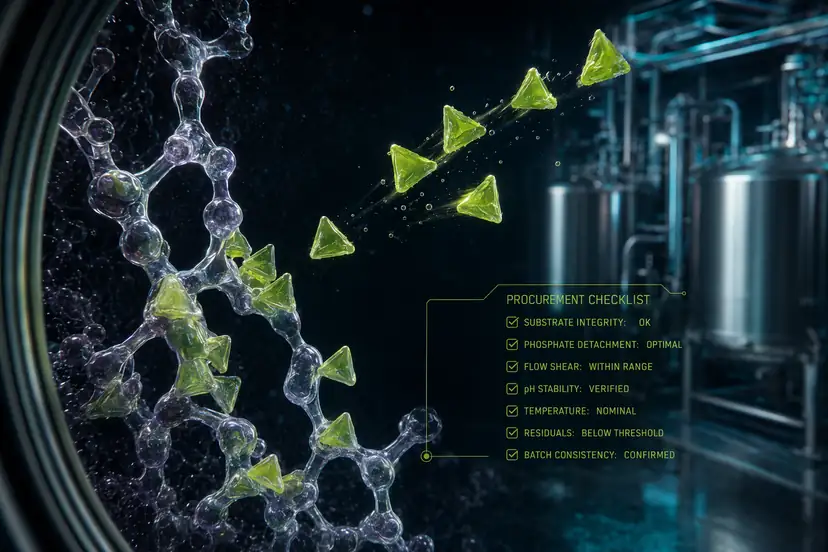
learn
Bulk Phosphatase Procurement Checklist | Phosveil
A practical B2B checklist for specifying, qualifying, and buying bulk phosphatase enzymes for diagnostics, food processing, biocatalysis, and industrial workflows.
Request pricing A practical B2B checklist for specifying, qualifying, and buying bulk phosphatase enzymes for diagnostics, food processing, biocatalysis, and industrial workflows.
Request pricingBuying phosphatase in bulk is not a one-line purchasing task. “Phosphatase” describes a functional class, not a complete specification. The right procurement brief defines the phosphate-bearing substrate, process matrix, stability requirements, impurity limits, documentation needs, and supply format before commercial discussion begins.
Phosveil helps technical buyers convert application requirements into a controlled purchasing brief for phosphatase enzymes—clear enough for formulation, process, quality, and sourcing teams to evaluate together.
Before requesting pricing, align internally on the use case. The same enzyme family can be evaluated very differently across diagnostics, food processing, molecular biology workflows, industrial biocatalysis, or waste-stream treatment.
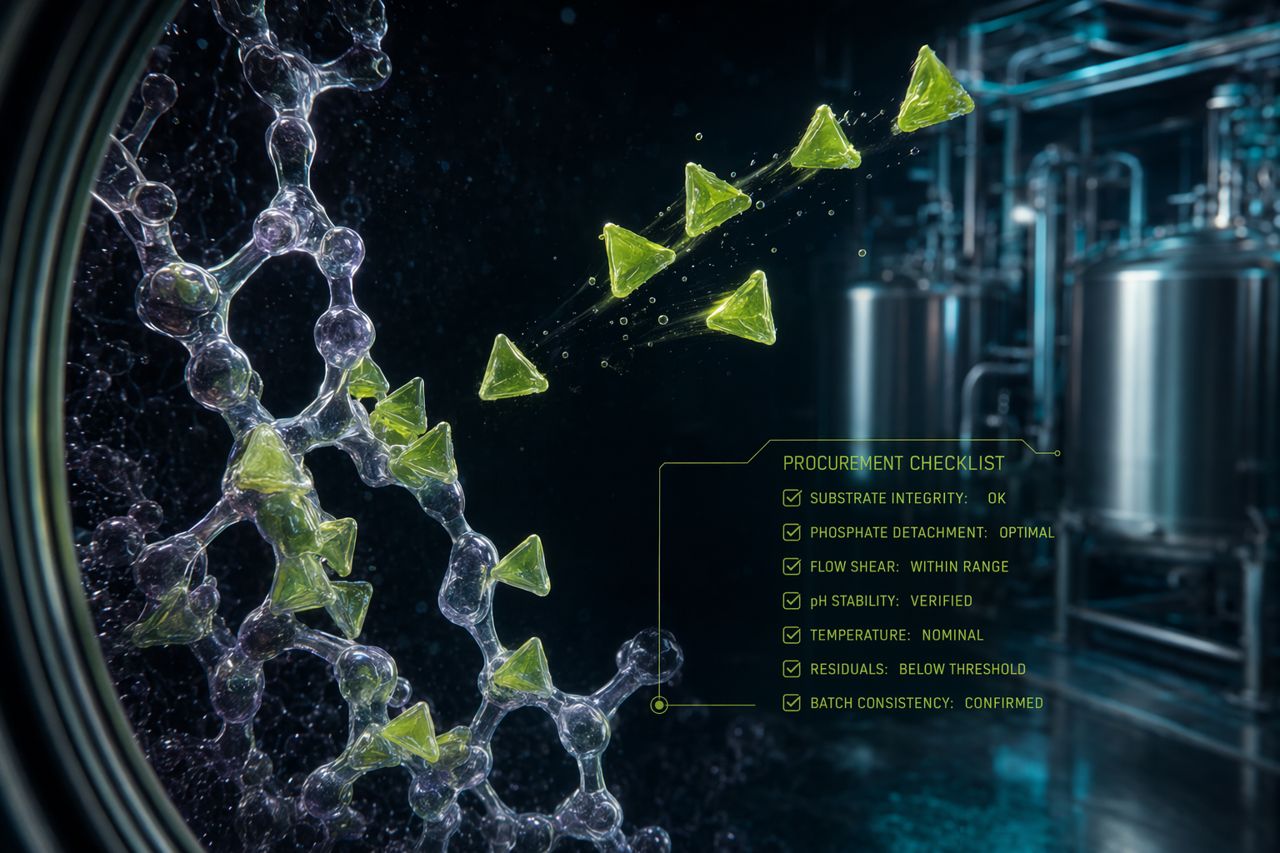
Define what the enzyme is expected to remove phosphate from.
Also clarify whether the goal is complete dephosphorylation, partial conversion, signal generation, impurity reduction, viscosity or matrix modification, or downstream compatibility.
Procurement quality improves when buyers state real process conditions rather than ideal laboratory conditions.
Include:
This information helps narrow whether the request points toward alkaline phosphatase, acid phosphatase, broad-spectrum preparations, immobilization-ready enzyme, or a more tailored phosphatase solution.
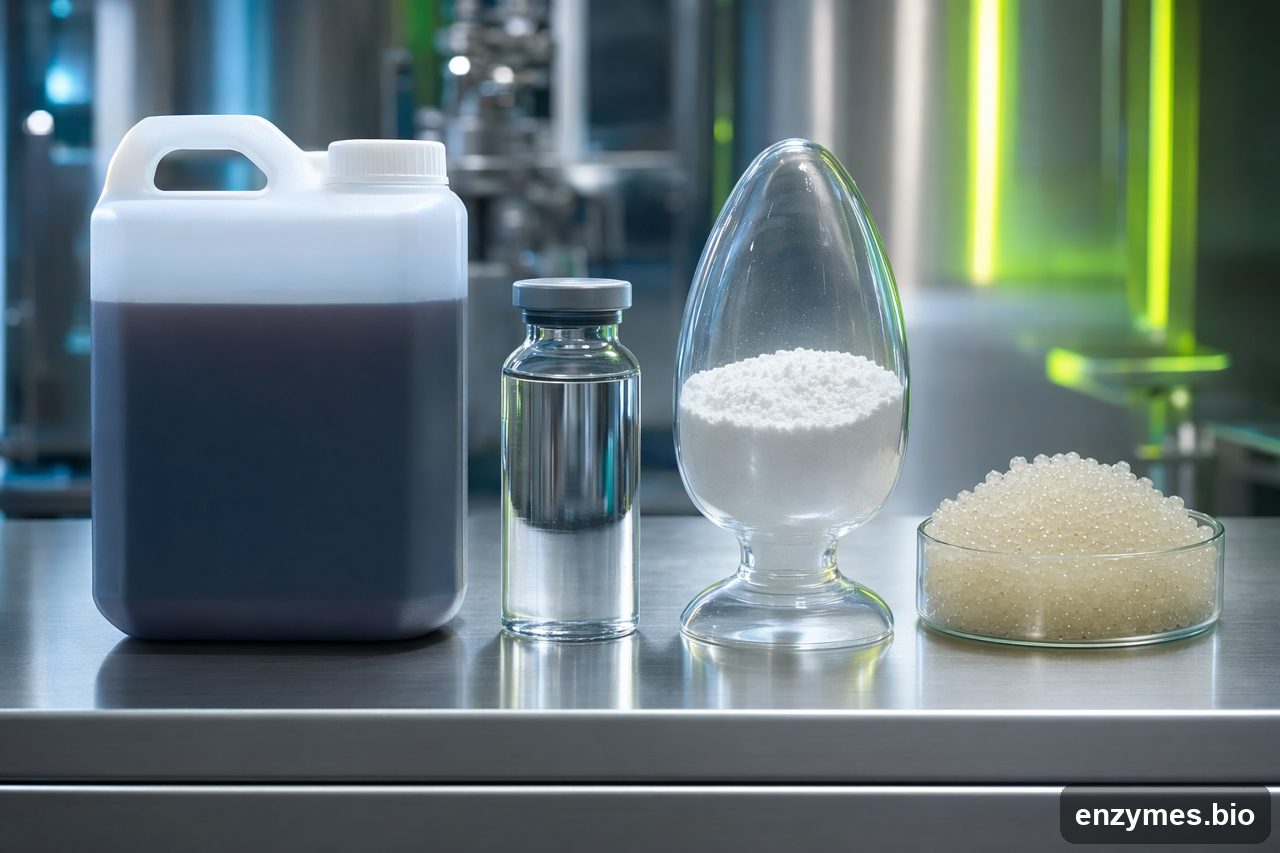
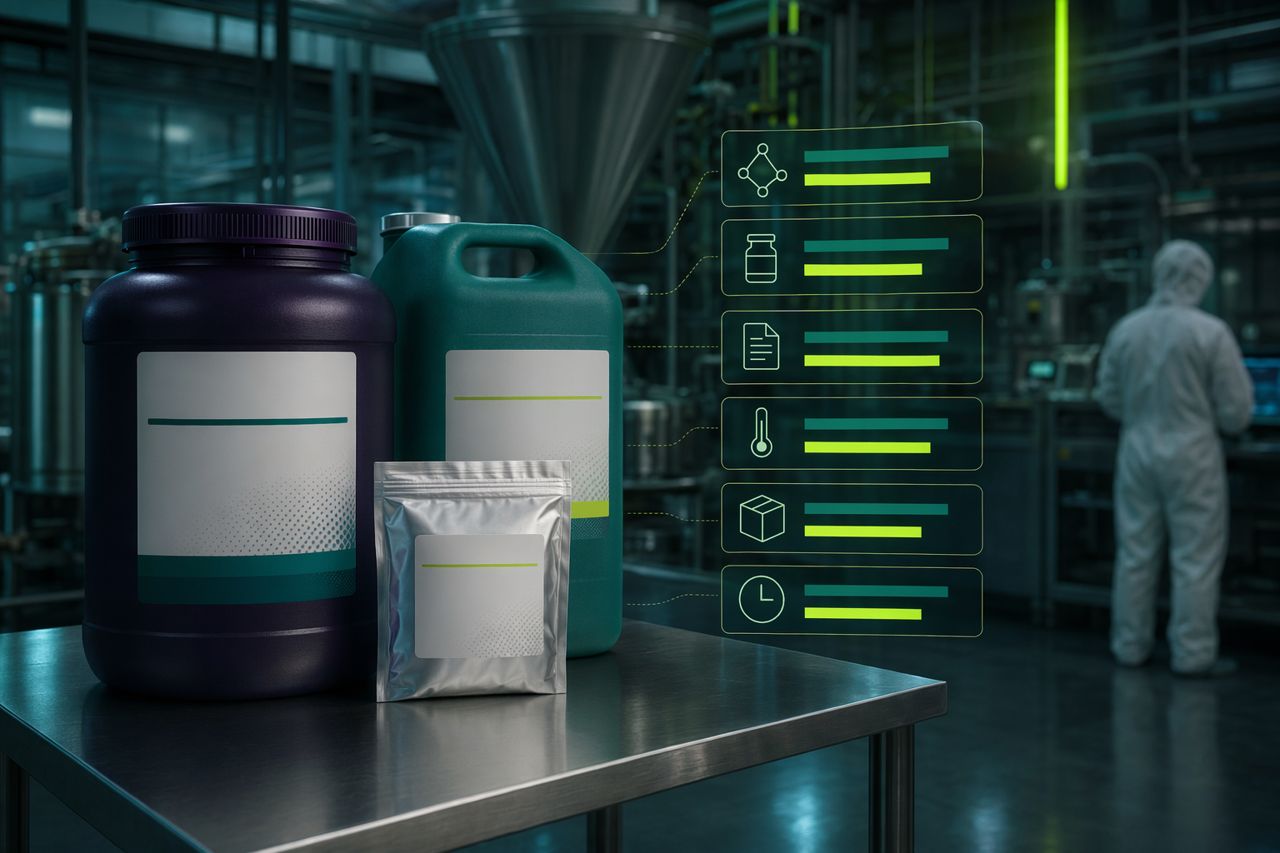
Bulk phosphatase can be supplied in different physical formats depending on stability, formulation, and process needs.
Common decision points:
The lowest quoted price is rarely the lowest process cost if the format creates handling loss, inconsistent dispersion, or preventable cold-chain risk.
For regulated, validated, or customer-audited workflows, documentation can be as important as enzyme performance.
Ask for availability of:
Do not assume every phosphatase preparation carries the same documentation package. Match the paperwork to the risk level of your process.
Use these questions to move from sample evaluation to dependable supply.
Diagnostics teams usually prioritize consistency, low interfering background, clean documentation, and predictable behavior in formulated reagents. Specify buffer compatibility, stabilizer restrictions, residual concerns, and whether the enzyme will be used in signal development, sample preparation, or reagent conditioning.
Food technologists should clarify matrix composition, processing temperature, pH, contact time, ingredient restrictions, and documentation expectations. If the enzyme is used as a processing aid, confirm declaration, origin, and compliance requirements early.
Process engineers should define reactor conditions, feed variability, downstream separations, cleaning exposure, and whether enzyme reuse or immobilization is being considered. Packaging and supply continuity become more important as batch size increases.
Teams purchasing beyond catalog-scale quantities should specify purity expectations, formulation constraints, and sensitivity to nuclease, protease, or other enzymatic side activities where relevant to the workflow.
Use this structure when contacting Phosveil for pricing or technical review:
Pause the purchase if any of these points remain unclear:
If you are comparing phosphatase options for a commercial, pilot, or validated workflow, send the process constraints you can share. Phosveil will review the application fit and respond with next-step pricing guidance through this site’s own request pathway.
The best bulk phosphatase purchase is not the most generic one. It is the preparation whose format, documentation, stability profile, and supply plan fit the process already being built. Define the operating window first; pricing becomes more meaningful after that.

Tell us your application and volume — we reply with pricing and lead time.